

At QAPI360, we understand that in the fast-paced world of Emergency Medical Services (EMS), every second counts. Efficient response times are not just a metric; they are a lifeline for patients in critical need of pre-hospital care. Analyzing these response times and establishing operational benchmarks are crucial for continuous quality improvement and optimal patient outcomes.
The Importance of EMS Response Time Analysis
For EMS agencies, healthcare risk management starts with understanding their operational performance. Analyzing response times offers invaluable insights into the efficiency of current protocols, resource allocation, and areas needing improvement. Delays in response can significantly impact patient survival rates and overall health outcomes. By meticulously tracking and analyzing these times, agencies can identify bottlenecks, streamline processes, and ultimately enhance the quality of care provided.

Key Metrics in EMS Response Time Analysis
Several key metrics are pivotal in evaluating EMS response times:
Call Processing Time: The duration from when the emergency call is received to when the dispatch is initiated.
Dispatch Time: The time taken to alert and dispatch the EMS unit.
Travel Time: The time the EMS unit takes to reach the patient's location.
On-Scene Time: The time spent assessing and treating the patient at the scene.
Transport Time: The time taken to transport the patient to a medical facility.
Analyzing each of these components helps pinpoint specific areas where time can be saved, leading to faster overall response times.
Leveraging Technology for Efficient Analysis
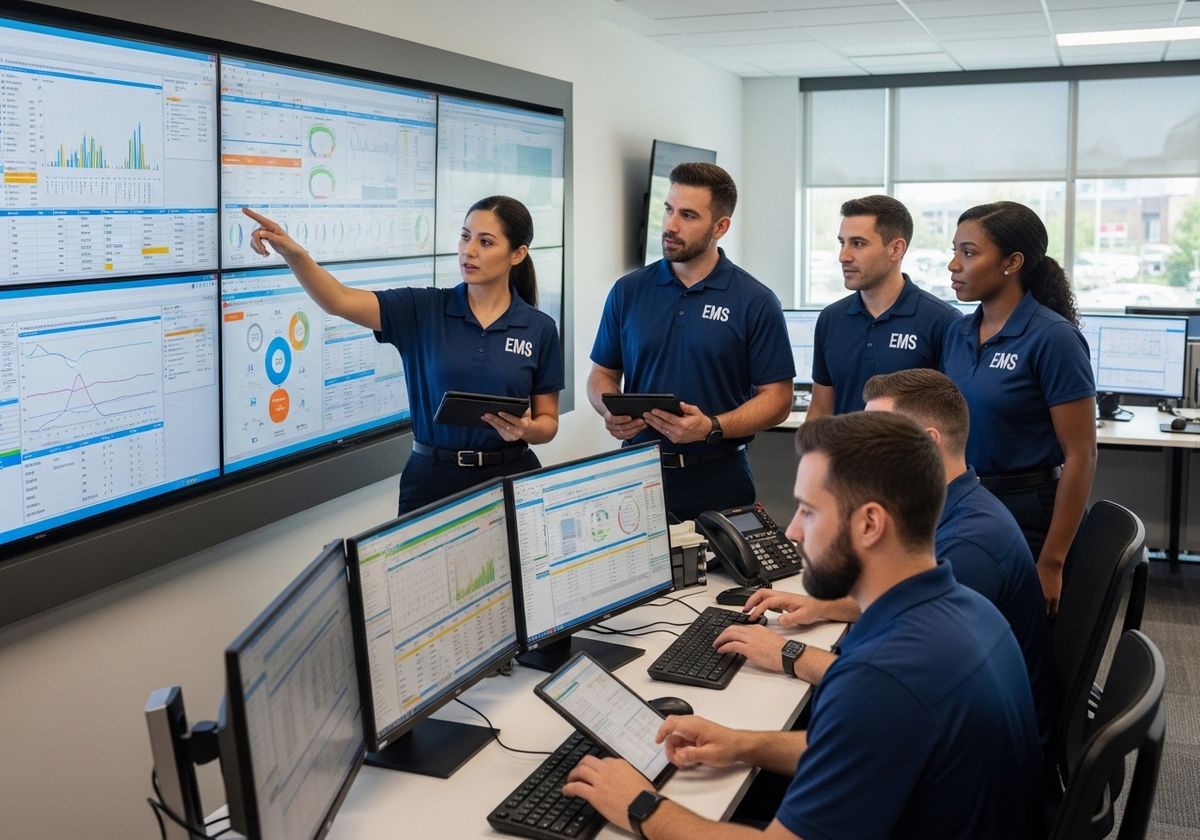
Modern technology plays a significant role in improving EMS response time analysis, providing the tools necessary to collect, manage, and analyze data effectively. These quality assurance systems can automate data collection, generate real-time reports, and provide dynamic visualizations that aid in identifying trends and patterns. Advanced software solutions can also integrate with GPS and mapping technologies to optimize routing and dispatch processes.
Setting and Achieving Operational Benchmarks
Establishing realistic and achievable operational benchmarks is essential for driving improvement. These benchmarks should be based on data-driven insights, considering factors such as geographic location, population density, and available resources. Regular monitoring and evaluation of performance against these benchmarks allow agencies to track progress and make necessary adjustments. It’s also crucial to foster a culture of continuous improvement, where all team members are committed to enhancing response times and patient care.
Effective EMS response time analysis is a cornerstone of pre-hospital care. By understanding key metrics, leveraging technology, and setting achievable benchmarks, EMS agencies can significantly improve their operational efficiency and, most importantly, enhance patient outcomes. At QAPI360, we understand the critical importance of efficient and compliant healthcare operations. Our comprehensive software solution is designed to streamline the quality improvement journey for ambulance and EMS services. Discover how QAPI360 can help your agency achieve optimal performance and compliance. Contact us today for a demo to learn more about our QMS software.